
How do I monitor feedback for my product area?
Start with Enterpret Agent and automations to monitor your product area. Ask the Agent to investigate feedback, then configure recurring reporting or a supported signal-driven monitor. Use connectors for external context and permitted follow-up actions.
Set up Agent monitoring and recurring reports
- Ask Enterpret Agent to analyze [product area] across [sources and customer segment] for [period]. Request significant changes, supporting counts, and linked customer quotes.
- For a daily report or weekly digest, create a scheduled automation with that scope, comparison window, cadence, timezone, and Slack or email destination.
- For investigation of potential quality issues, use Quality Monitor. For escalation-risk monitoring, see Escalation Shield. Review each monitor's supported triggers and configuration.
- Attach available connectors and Skills where needed, review permissions, test the result, and confirm the saved automation is active.
Follow scheduled Agent automations for the full reporting setup. Use the Dashboard steps below if you also want a saved visual view of the same product area.
Optional: monitor with a saved Dashboard
The example used here is monitoring the Login Experience for a product team.
Step 1: Create a Dashboard
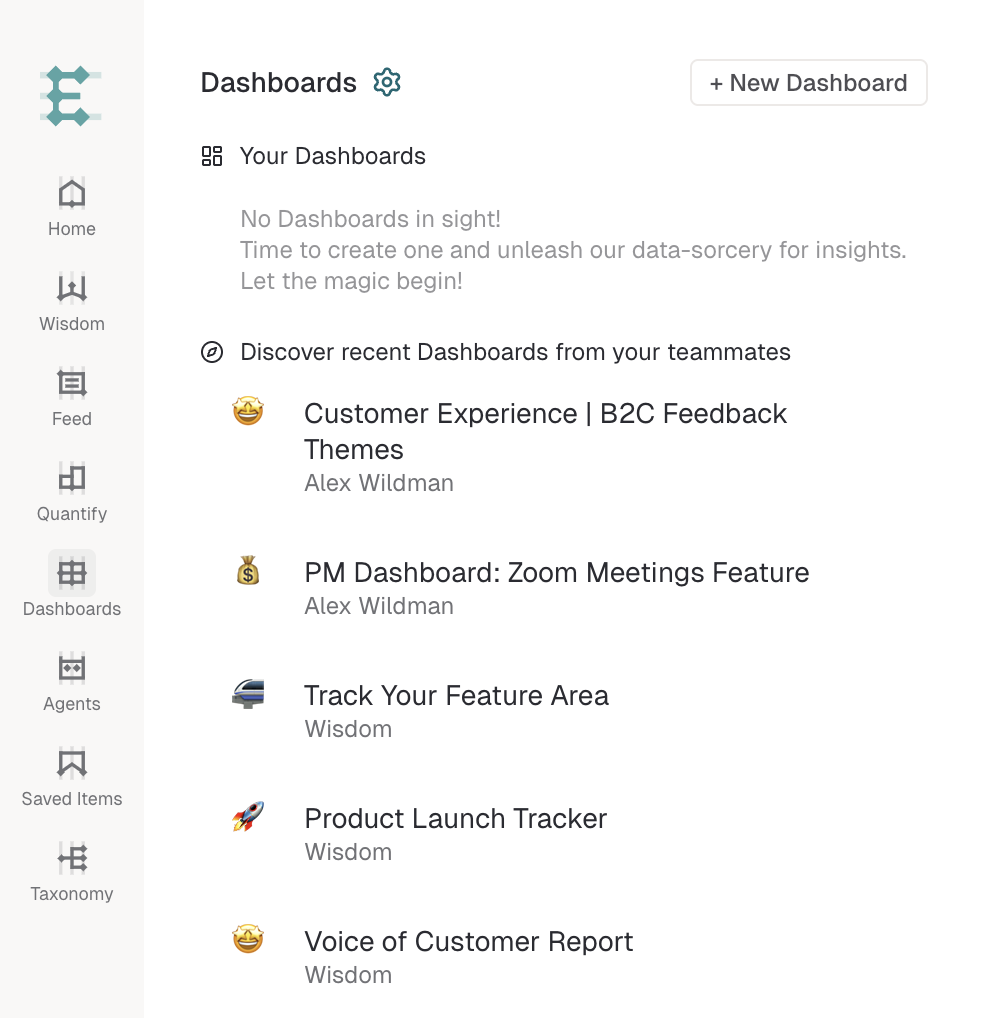
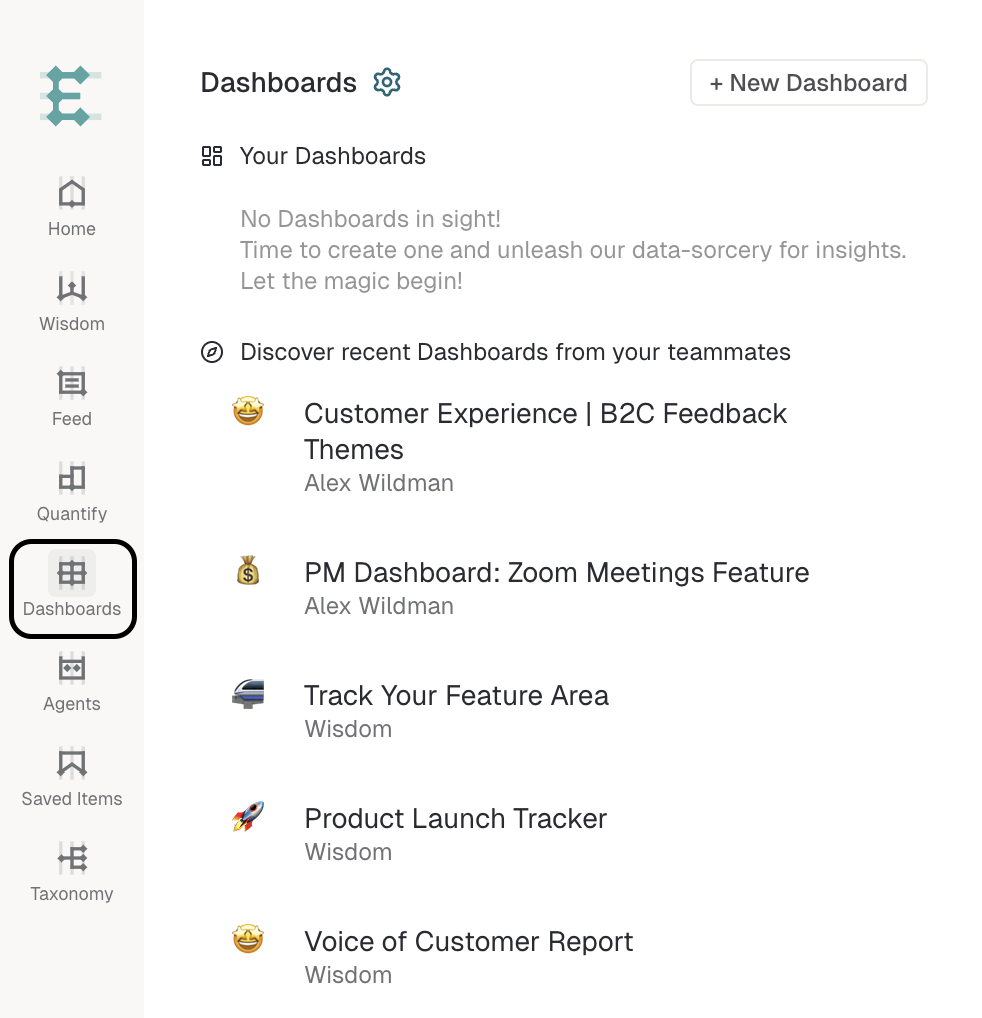
Click Dashboards in the left navigation bar.
Click New Dashboard.
If your workspace offers a Track Your Feature template, inspect its widgets and select it. Template contents vary. Otherwise start with a blank Dashboard and add the volume, sentiment, and theme analyses you need.
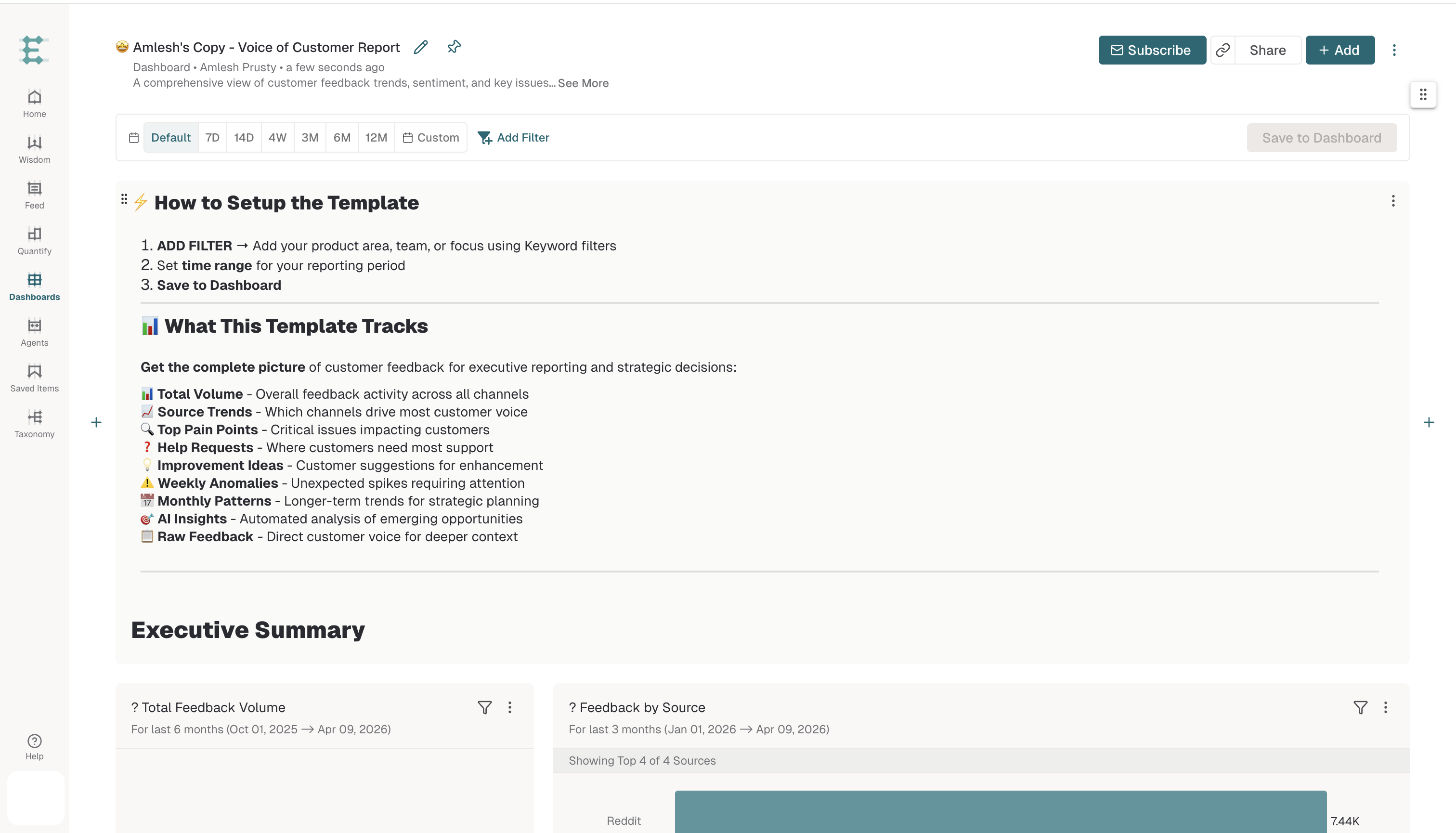
Click Use This Template to create the Dashboard. Name it for your product area — in this example: Login Experience.
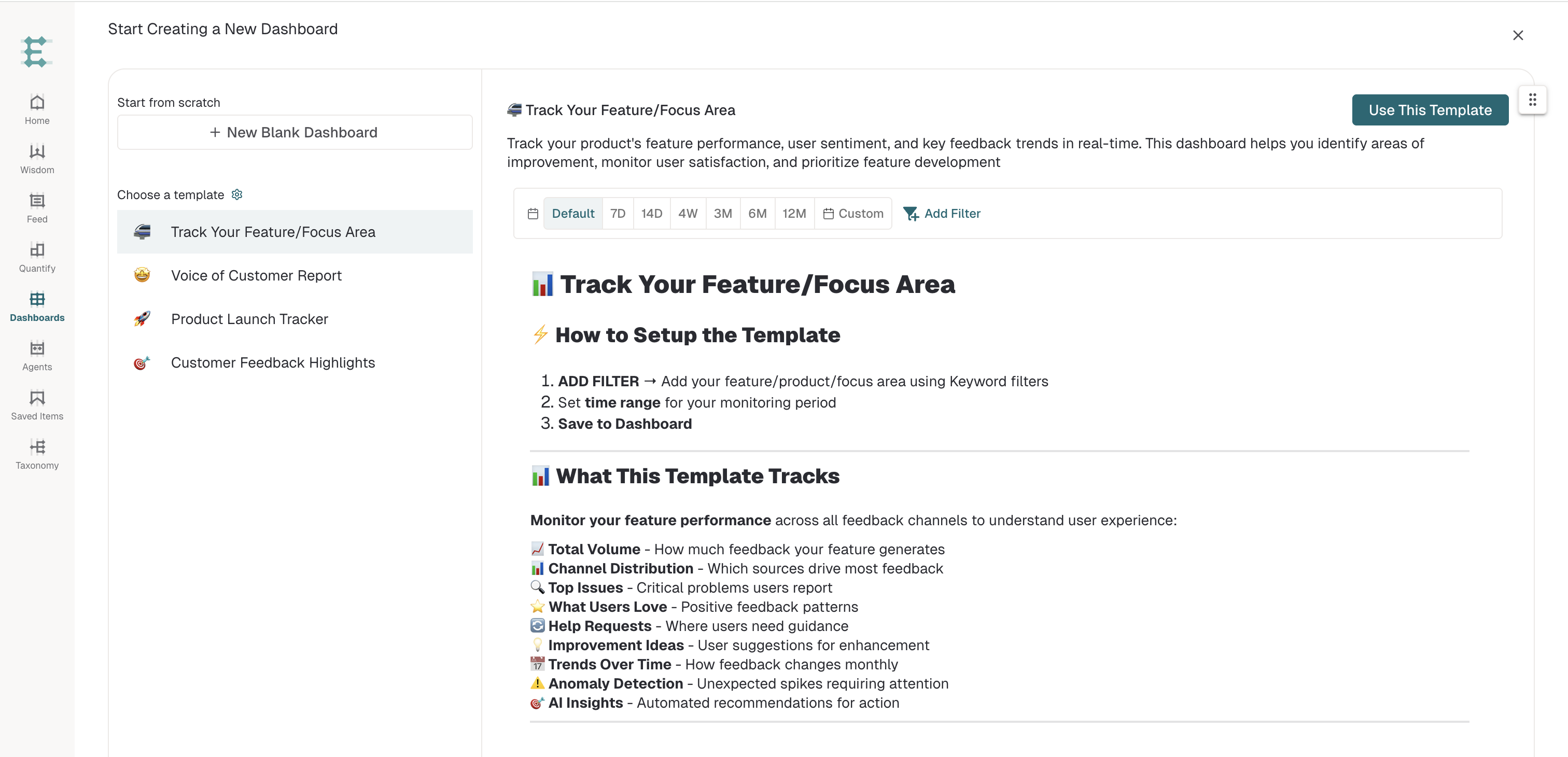
You can also start with a blank Dashboard by clicking + New Blank Dashboard to build it from the ground up with custom metrics.
Step 2: Apply Adaptive Taxonomy filters
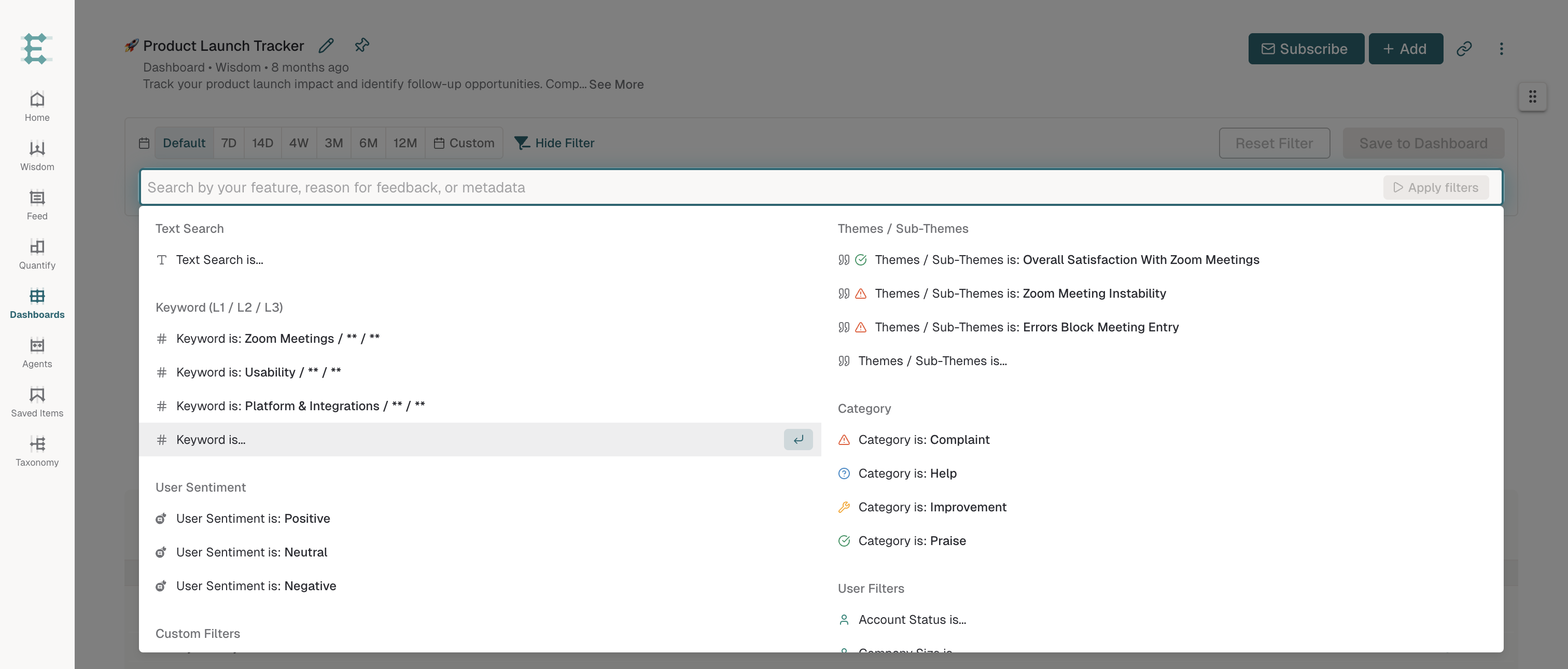
Click Add Filter next to the time range selector at the top of the Dashboard.
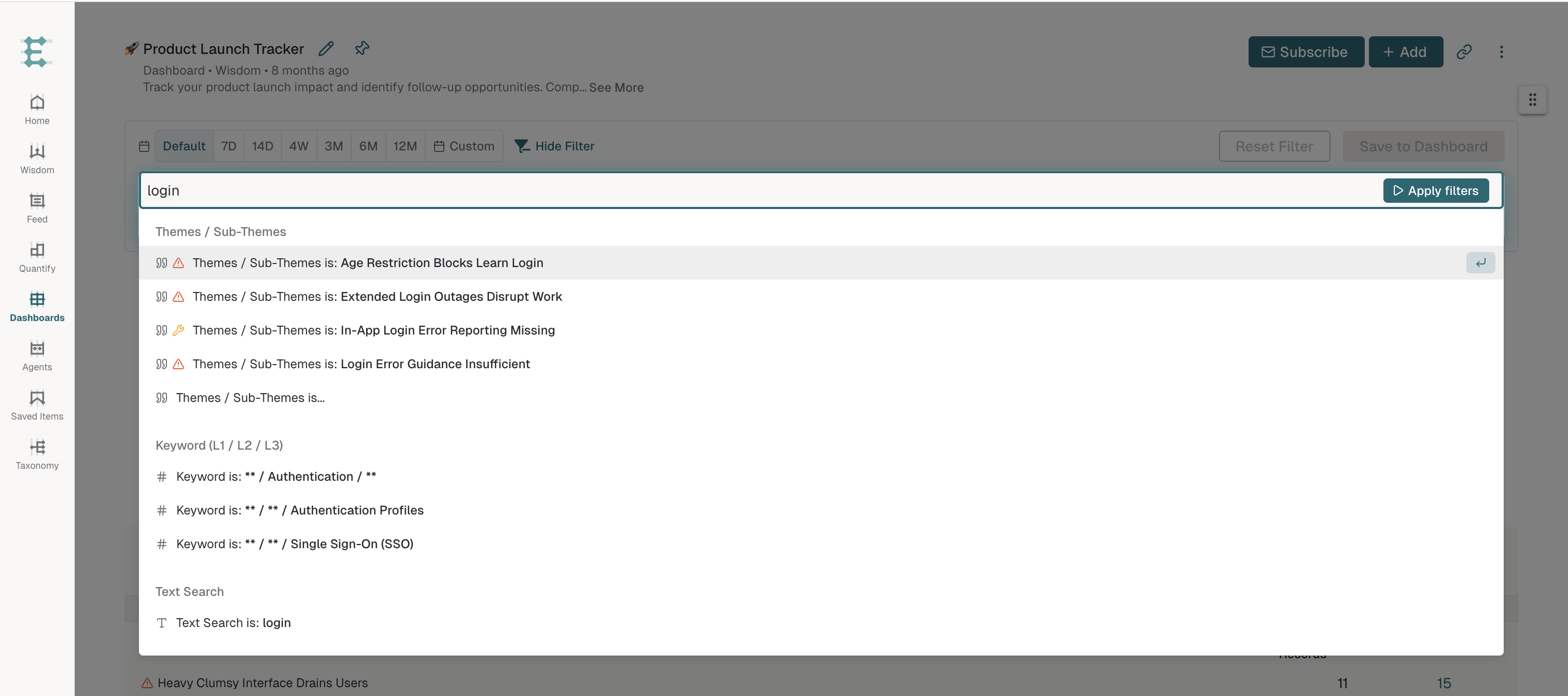
In the filter search box, type the name of your product area — for example, Login.
From the results, select the relevant taxonomy node. You can choose an L1 domain, an L2 feature area, or a specific L3 topic, depending on how granular you want to go. The Adaptive Taxonomy organizes feedback into five tiers: L1 (broad domains) to L3 (specific topics), then Theme and Subtheme levels.
Choose Apply filters and review the selected conditions.
Set a time range. 12 months is a good default for seeing trends. Then click Save to Dashboard to make the filter persistent.
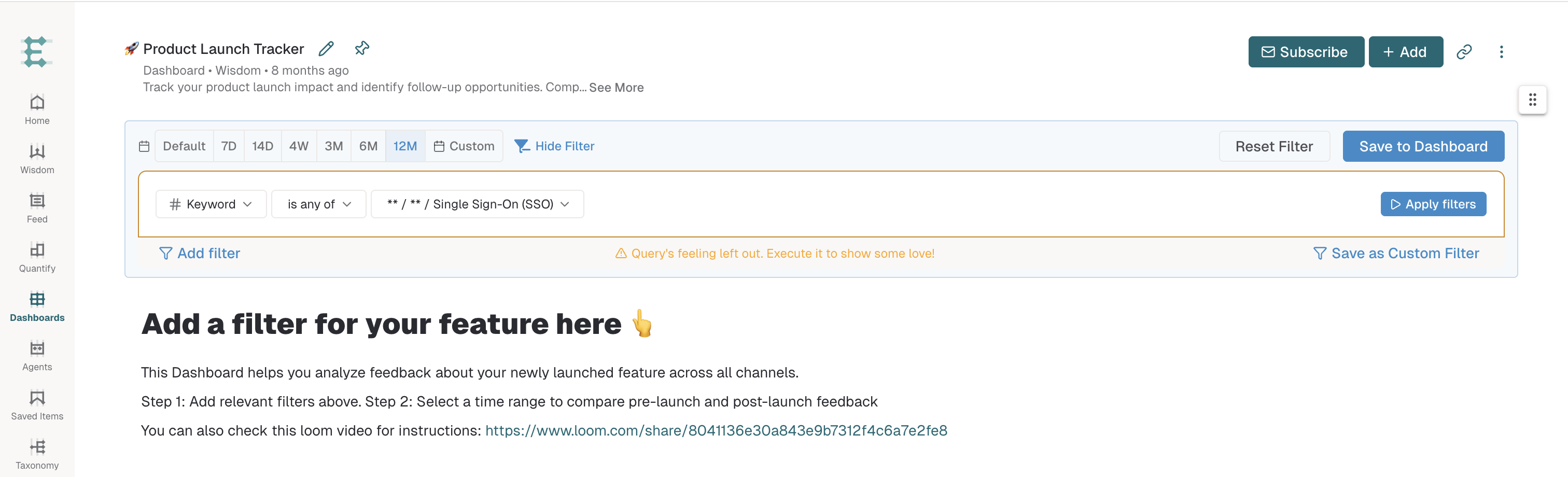
Check each Dashboard widget after applying the product-area conditions. Dashboard filters are combined with a widget's saved filters; they do not replace them. Confirm the period and measured object before interpreting the result.
Step 3: Use Wisdom for deeper analysis
Use Enterpret Agent where available, or the Wisdom experience retained in your workspace, to investigate the patterns shown by the charts.
Open Ask Agent or Agent → New session according to your navigation, or open Wisdom if that is the experience available to you. Open it separately and restate the Dashboard's sources, product-area conditions, customer segment, and reporting dates.
Ask questions scoped to your product area:
"What are the top complaints about Login this quarter? Include citations."
"How has sentiment about Login changed over the past six months?"
"What customer segments are most frustrated with Login?"
Do not assume the conversation inherited the Dashboard filters. Ask it to state the searched scope, support its findings with source links, and distinguish observations from hypotheses. Compare matching queries and verify the cited feedback before treating an explanation as a cause.
Step 4: Subscribe to stay updated
Click Subscribe in the top-right corner of the Dashboard.
A side panel opens. Add email addresses for team members who should receive updates.
Click the Slack Channels field to select channels where you want reports delivered.
Choose a delivery frequency:
Weekly works well for ongoing monitoring
Daily is useful during a product launch or incident
Monthly is better for less frequently changing product areas
Click Subscribe to confirm.
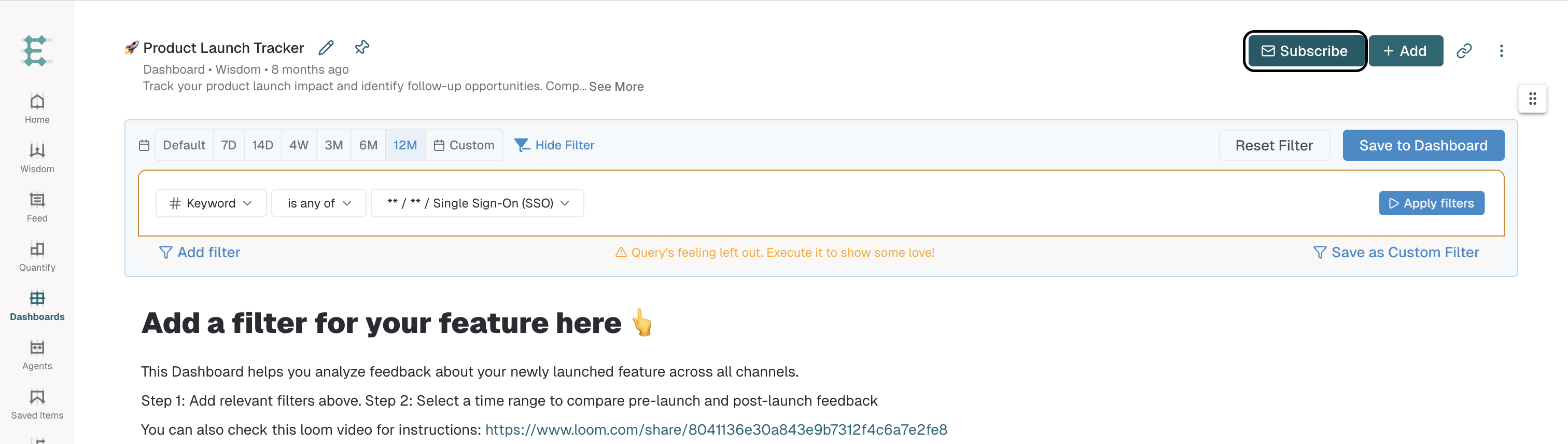
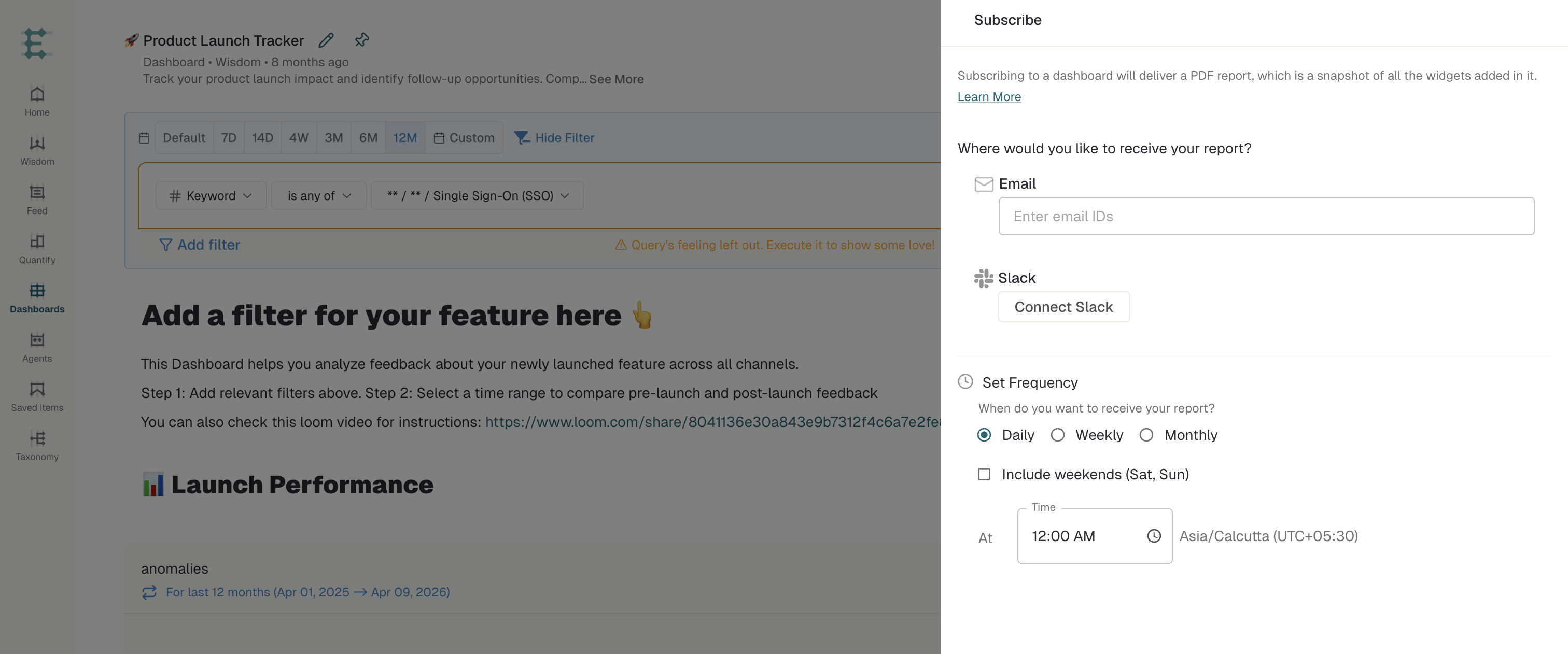
Your team will now receive a Dashboard report at the chosen frequency without having to open Enterpret manually. Reports include all Quantify charts and filters you've set up.
Tips for effective monitoring
Adjust your filters as needed: If you notice your filters are too broad or too narrow, click Add Filter again to refine them.
Add custom Quantify charts: Use the Add button to create new charts that answer specific questions about your product area.
Share the Dashboard: Click Share to give teammates access to view or edit the Dashboard.
Use Agent or Wisdom alongside your Dashboard: Use the conversation to investigate possible explanations, then check them against the relevant feedback. Charts and generated narratives do not by themselves prove causation.